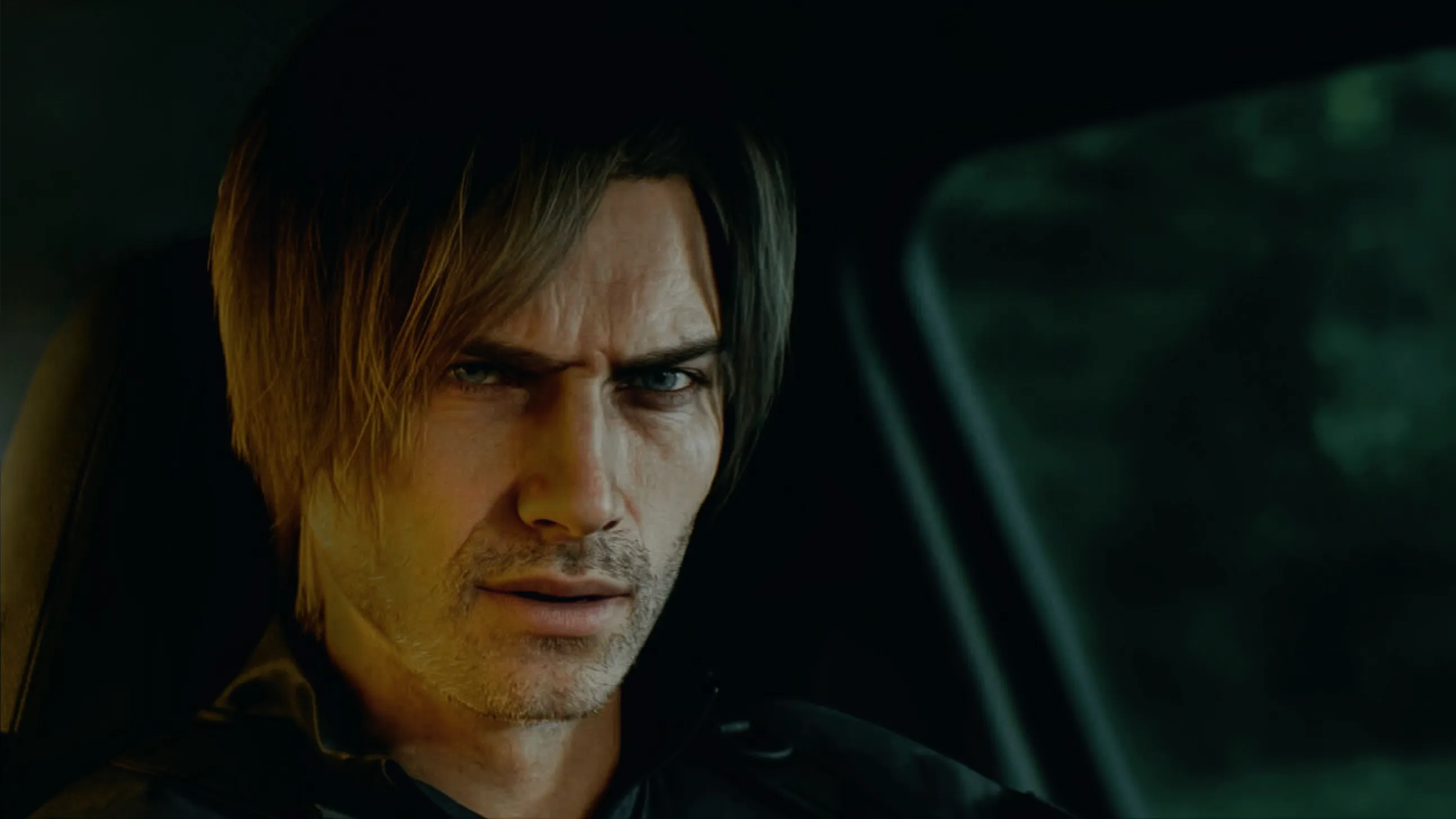
People sometimes describe AI voice work as typing words into a box and letting the machine talk. I understand why it can look that way from the outside. A voice comes out. It sounds close enough. Done.
That's not how it feels from this side.
What I make starts as writing, but the script isn't a simple transcript. It's closer to a performance map. The words matter, obviously, but so do the commas, the line breaks, the order of the thoughts, and the places where the voice is likely to breathe.
SCRIPT
The script is where the episode either becomes Leon or falls apart.
I'm not interested in just putting him into a fantasy situation and making him say pretty lines. The scene can be soft, romantic, domestic, protective, strange, or a little ridiculous, but the choices have to feel specific to him.
That means asking small questions before a line ever reaches the voice model.
Would he say this, or would he avoid saying it directly? Would he joke because he's relaxed, or because he's trying not to say something heavier? Would he take over the room, or quietly make sure everything dangerous is already handled? Would he comfort someone with a speech, or with water, a locked door, and one dry comment at exactly the right time?
Those answers matter more than the setup.
A premise can be simple. Coming home. Sitting in the rain. Bringing soup. Checking a fever. What makes it work is whether the details feel like choices he'd actually make.
That kind of specificity is hard to fake by noticing a character is popular and deciding to make content around him. The writing has to come from liking him enough to know the shape of his restraint, his humor, his tiredness, and the way he tends to protect before he explains.
The point isn't to make him say something nice. It's to make the nice thing sound like something he'd choose to say.
GENERATION
Voice generation is unpredictable. It isn't useless and it isn't magic. I just can't fully steer where it lands.
I write a line, run it, and most of the time the read is wrong. Too flat. Too fast. Too much lift at the end of a sentence. The wrong word gets emphasis. A soft line comes out too sharp, or a tired line comes out like someone reading copy at a commercial audition.
So I run it again.
And again.
Sometimes a line works on the second try. Sometimes I pull it ten or twenty times. Other times I stop fighting the take and rewrite the sentence so the model has a better shot at landing where I want.
The strange part is that the voice gives me things I didn't type. A breath before a word. A small laugh. A tired exhale. Sometimes those moments are perfect. Sometimes they show up in the middle of a calm line like the voice tripped over its own lungs.
So the script becomes a way of guiding those accidents. I use punctuation and spacing to invite the breaths I want and avoid the ones I don't. A comma can change the whole read. A line break can hand me a sigh worth keeping.
Half my job is choosing his words. The other half is choosing where he breathes.
EDITING
The generated audio is raw material. It isn't the episode.
The part that takes the longest happens after the voice exists. I cut phrases apart, move pauses by hand, and make the silence between lines feel like thought instead of dead air. Real speech has space in it. It hesitates. It trails off. It leaves room for the listener to breathe too.
That's the difference I'm usually chasing.
AI audio often sounds like a wall of words: too even, too clean, too continuous. Nothing has weight because nothing has time to settle. So I break it open. Every pause gets decided. Every quiet line has to stay quiet without disappearing. Every close line has to feel close without becoming harsh.
Then comes the sound work. EQ to give the voice more body. Dynamics so it doesn't sit at one flat volume. Reverb so he sounds like he's in a room, not trapped inside your skull. Rain, fabric movement, room tone, a mug on a table, a door, a shift in the chair. None of it arrives finished. I place it layer by layer.
Most of the time, the goal is for nobody to notice any of it.
If the room feels real, the editing disappears. If the pause lands right, it just feels like he meant it. If the sound design works, you stop thinking about sound design and start feeling like someone's there with you.
WHY I DO IT THIS WAY
Yes, an AI says the words.
And then I spend hours trying to make sure it doesn't feel like a machine reading a paragraph at you.
Both things are true.
I'm not interested in pretending the first part isn't there. I'd rather be clear about it. But the second part is where the work lives for me: the writing, the retakes, the pacing, the audio shaping, the small decisions that turn a generated voice into something people can actually rest inside.
That's the part I care about.
Not because it proves anything to anyone.
Because when someone says an episode helped them sleep, or made a bad night feel less lonely, I know exactly how many tiny invisible decisions had to line up for that to happen.